
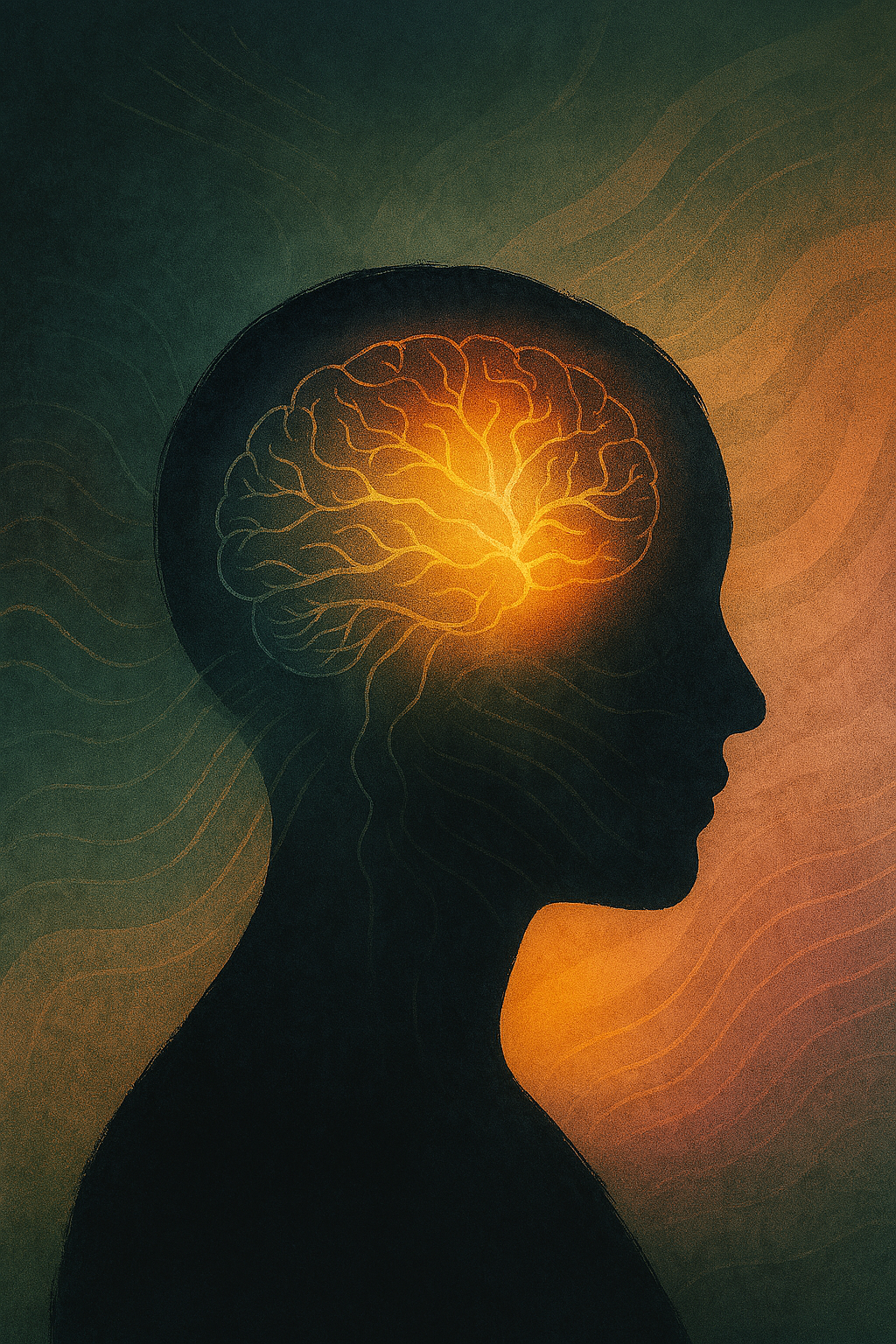
How trauma reshapes the brain—and how healing rewires it
For years, I thought my reactions were just emotional. I was “too intense” or “too much.” But neuroscience tells a different story. Trauma doesn’t just affect how we feel—it changes how our brains work.
These changes aren’t inevitable, but they are measurable. And they matter.
The Brain Under Construction
From birth through age five, the brain is building itself at lightning speed. It’s a time of incredible growth—and incredible vulnerability.
- Neural connections form at up to one million per second
- Unused pathways are pruned, while active ones are strengthened
- Axons are coated with myelin to speed communication
- Brain regions begin to specialize and take on distinct roles
This early neuroplasticity lays the foundation for emotional regulation, memory, attention, and connection. But when trauma enters the picture, it doesn’t just leave emotional scars—it disrupts the architecture.
When Stress Becomes the Blueprint
Trauma activates the body’s central stress system—the HPA axis. In children exposed to chronic or intense stress:
- Cortisol levels stay elevated, impairing growth and immune function
- The amygdala becomes hyperactive, increasing fear and vigilance
- The hippocampus may shrink, distorting memory and emotional regulation
- The prefrontal cortex struggles to develop, affecting decision-making and impulse control
These changes don’t mean a child is broken. They mean the brain is adapting to survive.
Chemistry and Connection
Trauma also affects the brain’s chemical messengers:
- Dopamine: Dysregulation can dull motivation and joy
- Serotonin: Altered levels may fuel anxiety and depression
- Norepinephrine: Elevated levels increase arousal and hypervigilance
These shifts can make everyday life feel harder—less rewarding, more reactive, and emotionally overwhelming.
Attachment and Wiring
Secure attachment helps wire the brain for safety, trust, and emotional regulation. But when attachment is disrupted by trauma:
- Children may develop insecure or disorganized attachment styles
- Neural circuits for empathy and social engagement may be underdeveloped
- The brain may prioritize survival over connection, reinforcing defensive patterns
Even in safe environments, the body may still brace. The mind may still scan. The heart may still hesitate.
Long-Term Effects
The neurobiological impact of early trauma can echo into adulthood:
- Increased risk of PTSD, depression, and anxiety
- Difficulty with attention, learning, and executive function
- Challenges in forming and maintaining relationships
- Higher susceptibility to chronic illness and substance use
But these outcomes are not fixed. The brain remains plastic. Healing is possible.
The Hope in Neuroplasticity
The same brain that adapted to survive can learn to feel safe again. Through trauma-informed therapy, somatic work, mindfulness, and supportive relationships, new pathways can form.
- Safety can be learned
- Regulation can be practiced
- Connection can be restored
Neuroscience doesn’t just explain the damage—it illuminates the pathways to recovery.
Add Your Thoughts